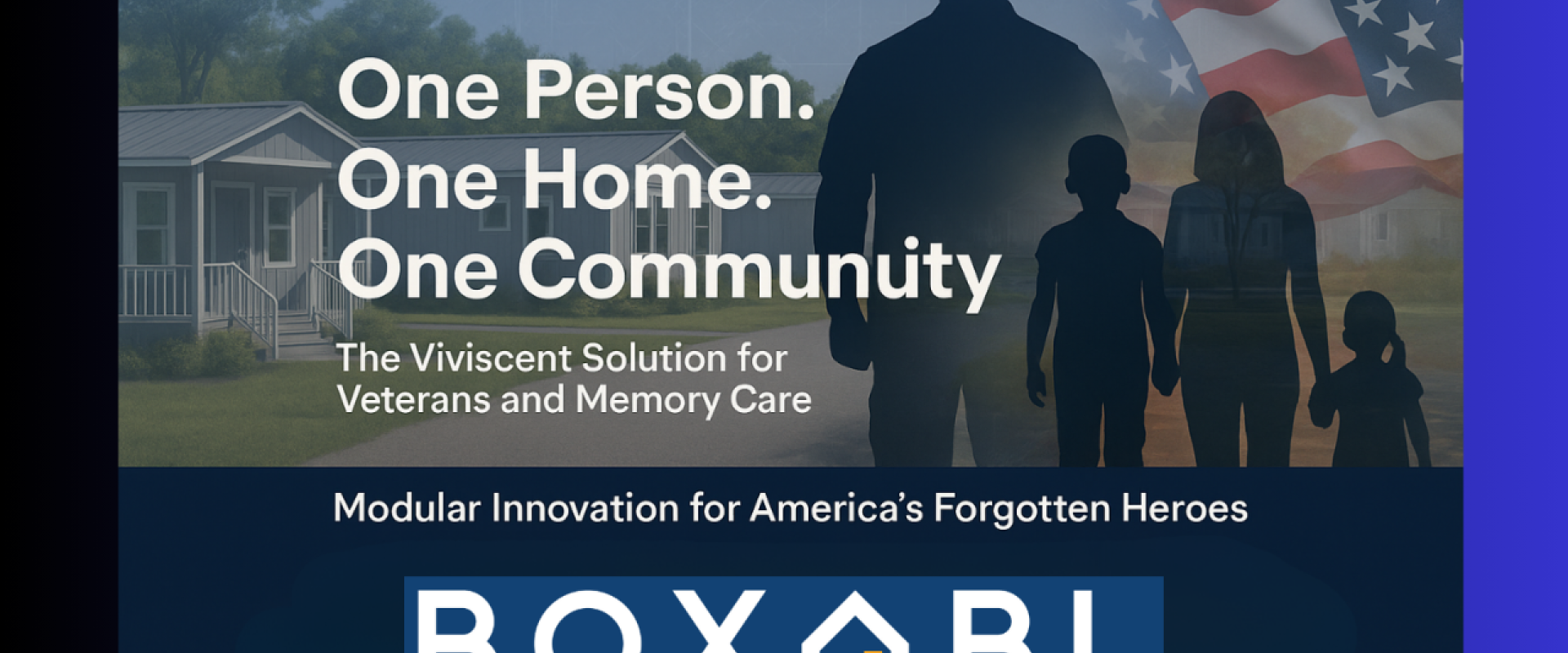
Restoring Dignity Through Memory Care: A National Model for Veterans and Underserved Families
Kevin Edmundson
VWF | Global Housing Advocate | One Person. One Home. One Community.
June 30, 2025
Restoring Dignity Through Memory Care: A National Model for Veterans and Underserved Families
Author: Kevin Edmundson Affiliation: Founder and Executive Director, Viviscent Wellness Foundation Date: June 30, 2025 Contact: foundation@viviscentwellnessfoundation.org Website: https://www.viviscentwellnessfoundation.org Zoom Contact: https://scheduler.zoom.us/vwf
Executive Summary
The Viviscent Wellness Foundation, a U.S.-based 501(c)(3) public charity, proposes a groundbreaking initiative to establish trauma-informed memory care and wellness villages that serve the unique needs of U.S. veterans and underserved families. This effort addresses an urgent national crisis and leverages modular innovation, public-private partnerships, and federal alignment to build sustainable and replicable care communities across the country. This model is guided by the principle that every American hero deserves not only shelter but dignity, healing, and the opportunity for community reintegration.
Through our lead corporate sponsor Boxabl, along with strategic co-sponsors S.I. Container Builds and Containing Luxury, Viviscent aims to establish fully compliant, energy-efficient, ADA-accessible housing communities in Lakeland, Florida, and Pueblo, Colorado. These initial locations will serve as national demonstration sites, with 17 additional states identified for future replication.
Section 1: The Veteran Memory Crisis in America
Data from the U.S. Department of Veterans Affairs (VA) and peer-reviewed studies indicate that veterans with PTSD and traumatic brain injuries (TBIs) face a disproportionately high risk of cognitive decline, including early-onset Alzheimer’s and other forms of dementia. As many as 10.6% of veterans with PTSD develop dementia compared to 6.6% of their non-PTSD counterparts. Additionally, more than 414,000 TBIs have been recorded among U.S. service members, many of whom now experience memory deficits, emotional dysregulation, and loss of independence.
Despite the growing need, most communities lack memory care infrastructure designed specifically for veterans. Conventional facilities often fail to provide trauma-informed design or behavioral support programs needed to mitigate long-term decline. The result? Countless veterans experiencing progressive memory loss in isolation, often without access to affordable housing or mental health services. Viviscent is committed to changing this trajectory.
Section 1a: Additional National Memory Risk Populations
While veterans remain at the forefront of Viviscent's mission, it is important to acknowledge that two of the largest demographic groups affected by memory-related conditions in the United States are: (1) low-income seniors living in rural communities, and (2) individuals in historically marginalized communities, particularly Black and Hispanic populations.
Low-income seniors in rural America often lack proximity to neurologists, behavioral therapists, or memory care units. A 2022 report from the Alzheimer’s Association found that over 60% of rural counties in the U.S. do not have a practicing neurologist, creating care deserts that severely limit early diagnosis and treatment.
Additionally, racial and ethnic disparities in memory care remain stark. Hispanic Americans are 1.5 times more likely, and African Americans are twice as likely, as non-Hispanic whites to develop Alzheimer’s or other dementias, according to data from the National Institute on Aging. These groups are often underdiagnosed, underinsured, and underserved in institutional care models.
Viviscent’s model is designed to extend care access beyond veteran populations alone. The modular, community-integrated approach creates new opportunities to serve these at-risk groups in both rural and urban deployment zones, closing longstanding care gaps in a replicable, equitable way.
Section 2: A Comprehensive Care and Housing Solution
Our Solution: The Viviscent Approach
At the heart of this initiative lies a transformative solution — one that reimagines memory care through the lens of dignity, accessibility, and innovation. Viviscent's model centers on a modular wellness village that combines healthcare, housing, and social infrastructure in a single, scalable ecosystem. By integrating clinical spaces directly into housing communities, we reduce barriers to care, increase early intervention rates, and promote long-term stability.
My Solution: A Mission Born from Survival
This vision was born from my own experience — surviving cancer, a stroke, and recovery from opioid dependency. I discovered firsthand how disconnected, inaccessible, and impersonal our current healthcare systems can be, especially for those without strong financial or family support. My recovery was only possible through plant-based therapies, holistic support, and meaningful connection. That experience became the foundation for Viviscent.
Now, we bring that insight to others, building communities where memory care and support are not afterthoughts, but central pillars of daily life. We are not just constructing units — we are constructing outcomes. Our solution is not theoretical. It is lived, proven, and ready to serve.
The Viviscent Memory Care Village model is a bold and integrated solution that combines trauma-informed memory care with permanent, supportive housing. Each village includes:
- Modular memory care units (ADA-accessible and trauma-informed)
- Behavioral health pods and PTSD therapy wings
- On-site functional medicine and cognitive therapy clinics
- Clinical offices for physicians, psychologists, and case managers
- Affordable family housing and caregiver accommodations
- Workforce development and vocational training hubs
- Community gardens, walking paths, and shared healing spaces
Furthermore, each site will incorporate green building standards including solar energy systems, rainwater harvesting, and efficient insulation methods that significantly reduce utility costs for residents.
Section 3: Legal, Federal, and Strategic Alignment
Our initiative is fully aligned with federal priorities and eligible for multiple funding programs including:
- USDA Rural Development Community Facilities Program (7 U.S.C. §1926)
- HUD Section 202 and Section 811 supportive housing
- VA Grant and Per Diem (GPD) (38 C.F.R. §61)
- HHS trauma-informed care expansion funds
- CDBG funding under 42 U.S.C. §5301 et seq.
- Americans with Disabilities Act (42 U.S.C. §12101 et seq.)
These grant programs each offer distinct funding mechanisms and target populations:
- The USDA Rural Development Community Facilities Program provides low-interest loans and grants to develop essential community infrastructure in rural areas. Funding is typically available for public health and safety facilities, including health clinics, elder care, and behavioral health services. Eligible applicants include nonprofits, tribal entities, and local governments.
- HUD Section 202 supports housing with supportive services for very low-income elderly persons, often structured as capital advances and project rental assistance. HUD Section 811 provides similar support for persons with disabilities. Both programs prioritize developments that combine independent living with access to care.
- The VA Grant and Per Diem (GPD) program offers capital and operating grants to nonprofits serving homeless veterans. This program funds transitional and permanent housing, including clinical support, case management, and therapy spaces.
- HHS trauma-informed care expansion funds are issued through SAMHSA and other agencies to support integrated behavioral health and trauma recovery services. Grants prioritize projects that serve underserved communities, especially veterans, youth, and communities of color.
- Community Development Block Grants (CDBG) are awarded by HUD to municipalities and states to support neighborhood revitalization and infrastructure. CDBG funding is often used to address housing insecurity, accessibility improvements, and localized public health efforts.
Viviscent’s proposal not only fulfills housing obligations under these statutes but also expands the accessibility of services guaranteed by federal law to populations too often left behind.
Section 4: Partnerships that Make it Possible
Our solution is powered by world-class innovators:
- Boxabl: Lead sponsor and modular housing manufacturer committed to high-efficiency builds. Their designs allow rapid deployment of homes and clinical spaces, with a 40% reduction in build time and up to 25% lower cost.
- S.I. Container Builds: Licensed modular builder with projects in AL, CO, IL, IN, MA, MI, MD, VA, WI, and NC. Their rugged, repurposed shipping containers are ideal for sustainable clinic and housing units.
- Containing Luxury: Specialists in design-enhanced living environments, ensuring units are not just functional but beautiful and dignified.
Together, we are redefining what it means to heal through housing.
Section 5: Economic and Social Impact
This initiative isn’t just about buildings – it’s about restoring dignity. Studies confirm that safe, stable housing dramatically reduces hospitalizations, suicide rates, and healthcare costs among aging and traumatized populations. We estimate a 25–30% decrease in emergency care use for memory-impaired veterans placed in our villages, with an associated drop in long-term care costs funded by Medicare and Medicaid.
Community wellness hubs will create local jobs, upskill residents, and provide training in green trades, caregiving, behavioral health support, and administrative roles. Each community becomes a generator of hope, economy, and healing.
Section 5a: The Need for a National Rollout and Long-Term Flexibility
The memory care crisis in America demands a solution not confined to one region or demographic. Viviscent’s model is designed to scale — not only to meet immediate needs in Florida and Colorado, but to serve as the foundation of a national rollout strategy.
By leveraging USDA-approved modular designs, we can rapidly replicate our Memory Care Villages across rural and urban areas nationwide. Each project can be tailored to local population needs while remaining compliant with federal grant and reimbursement structures.
While memory care remains our core focus, USDA’s funding framework allows for the inclusion of diverse care models on the same 40-acre footprints. This opens the door to future expansion without being locked into a single-use facility model. Eligible facility types include:
- ✅ Skilled Nursing Facilities (short-/long-term care, rehab, stroke recovery)
- ✅ Assisted Living (with or without memory care components)
- ✅ Independent or Supportive Housing with Services
- ✅ Outpatient Behavioral Health Clinics (PTSD, trauma, TBI support)
- ✅ Adult Day Health Programs (Medicaid-billable under HCBS waivers)
- ✅ Transitional/Post-Acute Rehab Centers
- ✅ Community Health & Wellness Hubs (wraparound care, veterans, holistic care)
This model ensures that communities can evolve over time and that land use remains responsive to future care demands, economic development, and local partnerships.
Section 5b: Economic Impact of 40-Acre Memory Care Developments
The construction and operation of each 40-acre memory care and wellness village will significantly boost the regional economy. Each village is projected to create:
- 150–200 construction-phase jobs during the 12–18 month development timeline
- 85–125 permanent jobs, including positions in caregiving, nursing, administration, mental health, facilities management, and hospitality
- Indirect job growth through regional suppliers, contractors, wellness providers, and service businesses
Beyond direct employment, these facilities will:
- Stimulate demand for local vendors, food services, and utilities
- Increase regional tax revenue and stimulate land value in underutilized rural zones
- Reduce public costs related to emergency care, incarceration, and housing instability among high-need populations
Each 40-acre site becomes an engine of regional revitalization, health equity, and community resilience.
Appendix A: Organizational Credentials
- Organization Name: Viviscent Wellness Foundation, Inc.
- Entity Type: U.S. 501(c)(3) Public Charity
- Federal EIN: 33-2503800
- Florida Charitable Registration #: CH78472 (Expires April 3, 2026)
- Florida Document Number: N24000014757
- Alabama Entity ID: 001-190-968
- Alabama Charitable Registration #: AL25-273 (Annual Filing Due: March 31, 2026)
- SAM.gov UEI: by request
- D-U-N-S® Number: 119483132
- Headquarters: 4603 Alvamar Trail, Lakeland, Florida 33801
Conclusion and Next Steps
Viviscent is ready to launch a national model for memory care that fulfills our promise to those who have served. Our modular care villages are replicable, affordable, trauma-informed, and aligned with federal mandates for innovation, equity, and access.
We welcome government officials, veterans service organizations, state agencies, and philanthropic leaders to schedule a meeting and explore partnership opportunities.
Contact: foundation@viviscentwellnessfoundation.org Schedule a call: https://scheduler.zoom.us/vwf Phone: 205-460-5305
Section 6: The Viviscent Solution – A Personal Blueprint for National Healing
The Viviscent model is not simply the product of a policy plan or architectural framework — it is the result of lived experience. As founder and survivor, Kevin Edmundson brings personal urgency and authenticity to this mission. After surviving multiple strokes, opioid dependency, and life-threatening cancer, Kevin realized firsthand how fragmented, inaccessible, and disempowering traditional care systems could be.
From that struggle, he envisioned a future in which communities could be rebuilt around recovery, where access to trauma-informed care, housing, and holistic wellness would not be rare luxuries but guaranteed opportunities. The Viviscent Solution reflects that vision. It represents a fusion of integrative wellness, affordable housing, and economic revitalization — born out of hardship and propelled by a purpose-driven call to action.
Each modular care village is designed not just to serve the body, but to restore the mind and spirit. These villages are safe harbors for veterans, for families on the edge, and for communities seeking reconnection. Kevin’s journey shapes every detail — from clinical access and trauma-informed design to nutritional pathways and workforce opportunity.
The Viviscent Solution is not just about remembering what was lost — it is about building what comes next.
References Administration for Community Living. (2021). 2021 Profile of Older Americans. U.S. Department of Health and Human Services. https://acl.gov/sites/default/files/Profile%20of%20OA/2021ProfileOlderAmericans_508.pdf
Alzheimer’s Association. (2022). 2022 Alzheimer’s Disease Facts and Figures. https://www.alz.org/media/Documents/alzheimers-facts-and-figures-2022-r.pdf
Centers for Disease Control and Prevention. (2023). Health Disparities in Alzheimer’s Disease and Related Dementias. https://www.cdc.gov/aging/agingdata/index.html
National Institute on Aging. (2022). Understanding Racial and Ethnic Disparities in Alzheimer’s and Dementia. https://www.nia.nih.gov/news/understanding-racial-and-ethnic-disparities-alzheimers-and-dementia
U.S. Department of Veterans Affairs. (2023). PTSD and Dementia Risk. https://www.ptsd.va.gov/professional/articles/article-pdf/id1413336.pdf
U.S. Department of Agriculture. (2024). Community Facilities Direct Loan & Grant Program. https://www.rd.usda.gov/programs-services/community-facilities/community-facilities-direct-loan-grant-program
U.S. Department of Housing and Urban Development. (2024). Section 202 and Section 811 Supportive Housing Programs. https://www.hud.gov/program_offices/housing/mfh/progdesc
Substance Abuse and Mental Health Services Administration. (2023). Grants for the Benefit of Homeless Individuals. https://www.samhsa.gov/grants/grant-announcements/sm-23-005
U.S. Department of Housing and Urban Development. (2024). Community Development Block Grant Program (CDBG). https://www.hudexchange.info/programs/cdbg/
U.S. Department of Veterans Affairs. (2024). Grant and Per Diem (GPD) Program. https://www.va.gov/homeless/gpd.asp
Edmundson, K. (2025, June 30). Restoring dignity through memory care: A national model for veterans and underserved families. Viviscent Wellness Foundation. https://www.viviscentwellnessfoundation.org
Hashtags #Viviscent #Boxabl #SIContainerBuilds #ContainingLuxury #VeteranMemoryCare #MakeAmericaHealthyAgain #USDAHousing #OnePersonOneHomeOneCommunity #ModularHealing #TraumaInformedDesign #HealingInPlace #HousingWithDignity