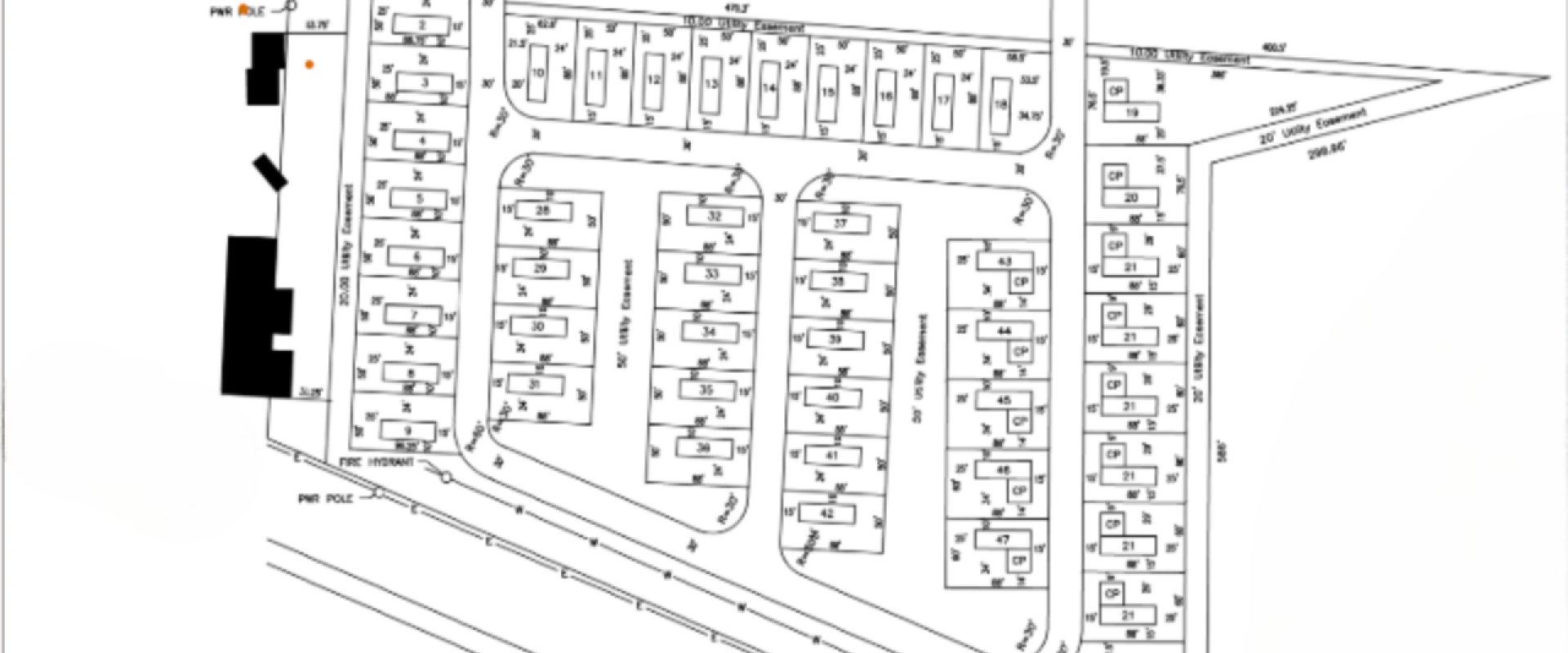
Concept rendering of the planned “Hope on Second” modular housing community in Alabama.
Kevin Edmundson
VWF | Global Housing Advocate | One Person. One Home. One Community.
April 13, 2025
VWF Hope on Second is a nonprofit-led initiative
Hope on Second is a nonprofit-led initiative to build 47 affordable, sustainable modular homes (from shipping containers) for veterans and underserved families in Carbon Hill (ZIP 35549). This rural community in Walker County faces economic distress and has a history of tornado disasters, making it an ideal candidate for holistic revitalizationviviscentwellnessfoundation.org. The project, spearheaded by the Viviscent Wellness Foundation, aims to provide lease-to-own housing with wraparound services (job training, wellness care) in a tiny-home village format. Below, we evaluate how this project could align with broader community and economic revitalization strategies – specifically HUD’s Choice Neighborhoods Initiative, FEMA’s disaster recovery/rebuilding programs, and Alabama’s state-level economic development and recovery efforts – and how the project’s financing can advance goals like housing displaced populations, spurring economic growth, improving disaster resilience, and leveraging grants or technical support.
Alignment with HUD’s Choice Neighborhoods Initiative
The HUD Choice Neighborhoods Initiative is a federal program that supports “locally driven comprehensive neighborhood plans to transform underserved neighborhoods into thriving communities” hud.gov. It focuses on three pillars – Housing, People, and Neighborhood – meaning it funds replacement of distressed housing, services to improve residents’ lives, and community improvements to revitalize neighborhoods hud.gov. Importantly, Choice Neighborhoods grants (for Planning or Implementation) require a target area to have significant poverty (at least 15% of residents in poverty) and to include “at least one severely distressed public or HUD-assisted housing project” as the focus nlc.orgnlc.org. In the case of Carbon Hill, the area clearly meets the poverty criterion – for example, the Census tract covering Carbon Hill has a poverty rate around 23%, well above HUD’s 15% thresholdopportunityzones.com. The city does have a small Housing Authority and HUD-subsidized units, suggesting there may be aging or distressed affordable housing that could qualify as a target for revitalization.
Hope on Second’s goals align closely with Choice Neighborhoods’ objectives. By creating new high-quality housing for low-income veterans and families, the project addresses the Housing component, replacing blighted or insufficient housing stock with attractive, energy-efficient homes. It also emphasizes supportive services – Viviscent plans to offer mental health care, workforce development, and financial education for residents – directly advancing the People component (improving education, employment, and health outcomes for local low-income residents). In addition, converting a vacant or underused site into a vibrant tiny-home community can catalyze broader Neighborhood renewal, turning an eyesore into an asset that may attract further investment in Carbon Hill. This comprehensive approach mirrors the Choice Neighborhoods model of linking housing redevelopment with community-wide changehud.gov.
Nonprofit-led modular housing as a partner: Choice Neighborhoods stresses broad partnerships and local engagement hud.gov. Typically, local governments or housing authorities lead these grants, but nonprofits are eligible to lead Planning Grants (with city or PHA support) nlc.org. The Viviscent Wellness Foundation, as a 501(c)(3), could partner with the City of Carbon Hill and the Housing Authority to pursue a Choice Neighborhoods Planning Grant, using Hope on Second as a centerpiece of the transformation plan. This partnership approach is encouraged; as one guide notes, housing authorities, cities, and nonprofits each bring resources and must “share the workload,” leveraging tools like zoning, services, and fundraising together nlc.orgnlc.org. The financing of Hope on Second – which includes philanthropic funds and potentially private investment – can serve as leverage/match for a Choice Neighborhoods grant, demonstrating local commitment. In fact, past Choice grants have shown that the program can “catalyze tremendous public and private investment, supplemental to the grant itself” nlc.org. By investing in modular homes up front, Carbon Hill could strengthen its case for federal support, since HUD would see an existing project ready to build on.
Example – Birmingham’s Smithfield revitalization: Alabama is no stranger to Choice Neighborhoods. In 2022, HUD awarded a Choice Neighborhood Implementation Grant to Birmingham to transform the Smithfield Court housing project into a mixed-income community, including 920 new units alongside neighborhood improvements hud.gov. That large-scale urban project illustrates what comprehensive planning and federal funding can achieve. While Carbon Hill is much smaller, a scaled-down version of this strategy could apply: a Choice Neighborhoods Planning Grant (typically up to $450k) could help Carbon Hill develop a master plan linking the Hope on Second housing, existing public housing, and other needs (downtown revitalization, infrastructure upgrades, etc.). If successful, the city could later compete for an Implementation Grant to fund additional housing phases or community facilities, with Hope on Second’s modular village as the initial phase and proof of concept. In summary, by aligning with Choice Neighborhoods, the Hope on Second project can become part of a larger federally supported vision to lift Carbon Hill out of distress, leveraging HUD funds to amplify its impact on housing and quality of life.
Alignment with FEMA Disaster Recovery & Rebuilding Programs
Carbon Hill’s tornado history (notably an F3 tornado in November 2002 that cut a 44-mile path across the region, killing 4 people and destroying many homes weather.govweather.gov) underscores the community’s vulnerability to natural disasters. FEMA’s disaster recovery programs are designed to aid such communities in both the immediate aftermath and the long-term rebuilding. In the short term, FEMA provides Individual Assistance – grants for temporary lodging, home repairs, and even direct housing (like trailers or manufactured homes) – to survivors of federally declared disasters. In the long term, FEMA’s focus shifts to “reducing the loss of life and property due to natural disasters” through mitigation and resilient reconstruction ema.alabama.gov. One key program is the Hazard Mitigation Grant Program (HMGP), which offers grants to states and localities after a disaster to fund projects that harden infrastructure or buildings against future disasters ema.alabama.gov. Under HMGP, FEMA can cover up to 75% of project costs to, say, build storm shelters or rebuild homes to higher standards, with state/local sources matching the rest ema.alabama.gov. Eligible applicants include local governments and certain nonprofits (communities can apply on behalf of individuals) ema.alabama.gov.
Hope on Second can advance FEMA’s recovery and resilience goals in several ways. First, by creating nearly 50 new homes for displaced or at-risk populations, it directly addresses housing needs that commonly arise after disasters. If a tornado (or other catastrophe) were to hit Carbon Hill in the future, having a stock of resilient, quickly deployable units in the community means some families could be rehoused locally instead of leaving the area. In effect, the project bolsters local capacity for post-disaster housing. Even outside of a disaster scenario, some beneficiaries might be households still recovering from prior storms or living in substandard housing that leaves them vulnerable – giving them a safe, sturdy home is a form of pre-disaster mitigation.
Crucially, the modular construction approach of Hope on Second is a strong fit for FEMA’s evolving disaster housing strategy. Traditional FEMA temporary housing (travel trailers or mobile homes) often faces criticism for being slow to arrive and not durable long-term. Modular housing, by contrast, can be manufactured and installed extremely fast. The industry demonstrated this after the 2023 Maui wildfires, where over 100 permanent modular homes were built, shipped to Hawaii, and set up within weeks to house displaced Lahaina residentsmodular.org. The speed and quality of modular builds “is unparalleled” in disaster response – for example, the first 15 homes in Maui were finished in two weeks, and 169 homes in just 60 days modular.org. FEMA has taken notice: as of early 2025, FEMA issued a Request for Information to modular manufacturers to incorporate modular homes into future disaster relief efforts modular.org. This means FEMA is actively looking to partner on projects that use modular housing for recovery. Hope on Second could serve as a model or pilot for FEMA, showcasing how a rural Alabama town can use modular units to provide safe, rapid housing for vulnerable groups. The project’s financing plan could potentially tap into mitigation grants – for instance, Carbon Hill’s local leaders might apply to use HMGP funds (from a past or future disaster declaration) to cover the cost of adding tornado-safe rooms to each unit or reinforcing the structures, since those measures clearly “benefit the disaster area” by making housing more survivable ema.alabama.gov. Such upgrades would improve resident safety and could be 75% FEMA-funded as mitigation, reducing the burden on the nonprofit’s budgetema.alabama.gov.
Additionally, aligning with FEMA’s objectives could bring technical support and interagency cooperation. FEMA, HUD, and state agencies often coordinate on long-term recovery – for example, after Alabama’s devastating 2011 tornado outbreak, federal recovery funds (FEMA, HUD CDBG-DR, etc.) were combined to rebuild entire neighborhoods in Tuscaloosa and other cities hud.gov. In Carbon Hill’s case, if Hope on Second is recognized as a critical recovery asset, it might attract resources like HUD Disaster Recovery grants or state disaster funds to expand infrastructure (e.g. improving roads, water, or safe rooms for the new community). At minimum, by building homes to modern codes (or above-code for high-wind resistance) and possibly using solar power and backup generators, the project will improve Carbon Hill’s resilience: fewer families will live in old, unsafe houses that collapse in storms, and emergency shelter needs will be reduced. This directly supports FEMA’s mission of mitigation and could make Carbon Hill eligible for future resilience initiatives. Overall, by embracing disaster-resistant design and rapid-build methods, Hope on Second aligns with FEMA’s push to “build back better” – turning a once-devastated site into a resilient community hub that stands ready for future challenges.
Alignment with Alabama State Economic Development & Recovery Initiatives
At the state level, Hope on Second fits into several Alabama economic revitalization and recovery frameworks. Rural Walker County (where Carbon Hill is located) has struggled economically in recent decades, facing high poverty and the decline of coal and manufacturing industries. Recognizing this, Alabama and federal partners have designated the area for special development attention. For example, Walker County contains a Qualified Opportunity Zone (census tract 204) covering about 2,100 residents – including Carbon Hill – with a median income (~$38k) far below the state average opportunityzones.comopportunityzones.com. This designation, created by the 2017 Tax Cuts and Jobs Act, is meant to spur private investment in distressed communities by offering tax incentives. A project like Hope on Second could potentially leverage Opportunity Zone funds or investors, given it’s located in a low-income zone. By attracting private capital (through tax-advantaged investment) to build affordable homes, the project advances the state’s goal of channeling new money into areas that need jobs and housing. Alabama’s economic development officials, through the Opportunity Alabama initiative, actively facilitate such projects, providing technical assistance to connect projects with Opportunity Zone investors.
Beyond tax-incentive programs, Alabama directly administers community development grants to revitalize struggling towns. The Alabama Department of Economic and Community Affairs (ADECA) uses federal HUD funds and state funds to support infrastructure, job creation, and housing in small communities. Carbon Hill has already benefited from this: in 2018 Governor Kay Ivey awarded the city a $120,000 Community Development Block Grant to install lighting at a new I-22 interchange truck stop, which created a dozen jobs and improved public safetyeinpresswire.comeinpresswire.com. That grant was paired with local/state matching funds and explicitly aimed at leveraging the new Interstate corridor for economic growtheinpresswire.comeinpresswire.com. Hope on Second could similarly attract or complement CDBG funding – for instance, CDBG grants might be used to build out water, sewer, or road infrastructure for the new homes, or to develop a community center on site – anything that benefits low-to-moderate income residents qualifies. Because the modular homes will house primarily low-income families (veterans on fixed incomes, etc.), the project squarely meets HUD’s national objectives, which the state must follow in disbursing CDBG. Alabama could also apply HOME Investment Partnership funds (another HUD program) or state housing trust funds, if available, to assist with construction or to provide down-payment assistance when lease-purchasers eventually buy their homes. In short, the state has funding streams that align with nonprofit housing projects in distressed areas, and Carbon Hill’s project would be a strong candidate for such support.
Coordination with regional and recovery initiatives is another angle. Walker County is part of the Appalachian region, and in 2023 the Appalachian Regional Commission’s POWER Initiative (aimed at coal-impacted communities) awarded a grant to develop a comprehensive economic development strategic plan for the county rpcgb.org. This planning effort, led by the Regional Planning Commission of Greater Birmingham, is explicitly intended to “align [local] communities’ priorities with federal funding initiatives from recent legislation” and to craft implementable development projects rpcgb.orgrpcgb.org. A sustainable housing community like Hope on Second fits perfectly into this framework – it addresses multiple community priorities (housing, veteran services, green development) and would be an “shovel-ready” project that a strategic plan could highlight for additional funding. State-level economic recovery efforts often focus on rebuilding not just infrastructure but human capital in areas hit by both economic decline and natural disasters. Alabama’s Disaster Recovery plans (such as those after the 2011 tornadoes) emphasized replacing lost housing and revitalizing hardest-hit neighborhoods with better housing and facilities hud.gov. Carbon Hill’s 2002 tornado and generally high disaster risk mean it can potentially tap state-managed disaster funds or programs like Alabama’s Safer Communities Fund (if one exists for tornado sheltering) to ensure new developments include storm resiliency. For example, the state EMA has offered grants for tornado safe rooms to homeowners; on a community scale, they could partner with the nonprofit to incorporate a large storm shelter or safe-room rebates for each unit.
Alabama also promotes public-private partnerships and nonprofit initiatives to tackle issues like veteran homelessness and rural poverty. The fact that Hope on Second is nonprofit-led is a strategic advantage: it can access charitable contributions and volunteer resources that government programs alone might not. The state can amplify these efforts by providing matching grants or technical support. For instance, if the Viviscent Wellness Foundation raises a certain amount privately, the state (or an entity like the Walker Area Community Foundation) might provide a matching grant to double the impact – a common approach in community development challenges. Technical support could come in the form of housing development expertise from the Alabama Housing Finance Authority (AHFA), which administers Low-Income Housing Tax Credits (LIHTC) and other financing tools. If appropriate, the project could even seek an allocation of LIHTCs – this would bring in private equity investors in exchange for tax credits, effectively financing a large portion of construction while ensuring the homes remain affordable under program rules. Alabama’s LIHTC program often prioritizes rural and special-needs housing, and veterans are a priority group, so Hope on Second could be competitive. Such financing would dovetail with state economic goals by both creating construction jobs and providing long-term affordable units.
Finally, consider comparable models within Alabama: In nearby Sumiton (also in Walker County), a nonprofit called Forever and Always Patriots is developing a tiny-house village for homeless veterans on donated land, including on-site counseling services wbrc.com. That grassroots project arose from local recognition of limited veteran resources in the countywbrc.com. Hope on Second is a similar model on a larger scale – and if multiple such villages take root in the region, state leaders could craft a coordinated policy (and funding support) to replicate their success. Alabama’s Department of Veterans Affairs and nonprofits like Habitat for Humanity might offer support or grants for veteran housing, which the project should certainly pursue. By aligning with these state and regional initiatives, Hope on Second transforms from a standalone project into a linchpin of broader economic recovery – demonstrating how investing in affordable housing and resilient design can help a small city like Carbon Hill rebuild its community fabric, retain residents, and attract new opportunities.
How Project Financing Contributes to Strategic Goals
The financing and funding strategy behind Hope on Second will be crucial to achieving and reinforcing the above revitalization goals. Key ways in which the project’s financing model contributes include:
- Housing for Displaced and Underserved Populations: By securing funds to build affordable homes, the project directly creates housing units for people who lack safe, stable housing – whether due to poverty or disaster. This fulfills a core need identified in federal programs. (For example, HUD’s Choice Neighborhoods and CDBG programs prioritize projects benefiting low-income or displaced residents hud.govhud.gov, and FEMA’s housing assistance exists to shelter those whose homes were lost ema.alabama.gov.) The project’s lease-to-own financing model (helping renters eventually buy their homes) also promotes long-term stability and wealth-building, aligning with policy goals to improve economic self-sufficiency in distressed communities.
- Economic Stimulus in a Distressed Area: The infusion of capital to construct the modular village – coming from charitable donations, grants, and possibly impact investors – acts as an economic stimulus in Carbon Hill. Dozens of jobs can be supported during site preparation, module installation, and ongoing maintenance/operations. Local contractors and suppliers may be engaged, keeping money in the region. This economic activity addresses the same aim as Alabama’s economic development grants (which have funded job-creating projects in Carbon Hill before) einpresswire.comeinpresswire.com. Once the homes are occupied, an increased resident base can boost local businesses and tax revenues, helping reverse decline. Such outcomes are exactly what state revitalization initiatives and Opportunity Zones are intended to spark.
- Improved Resilience and Reduced Disaster Impact: Investing upfront in resilient construction (hurricane clips, safe rooms, fire-resistant materials, backup power, etc.) might marginally increase project costs, but it yields long-term savings by preventing disaster losses. The project’s financing plan can integrate funds from programs like FEMA’s Hazard Mitigation or philanthropic resilience grants to cover these features, effectively bringing in external dollars to harden the community. As a result, Carbon Hill will suffer less damage and lower recovery costs from future storms – a benefit to residents and also to government (FEMA and the state) which won’t have to spend as much on emergency aid. This is a financial contribution in a broader sense: the project reduces the “disaster recovery bill” by investing in mitigation now, in line with FEMA’s mandate to fund measures that “enable mitigation measures to be implemented during recovery” ema.alabama.gov. Furthermore, demonstrating cost-effective resilient design in an affordable housing context can attract technical support from agencies and universities looking to pilot such approaches in Alabama’s tornado-prone communities.
- Leveraging Matching Funds and Technical Support: The presence of a substantial, ready-to-go project allows Carbon Hill to leverage additional resources that require local initiative. Many federal/state grants demand a local match or partnership – and Hope on Second’s financing can count toward that. For instance, if the city applies for an ARC or ADECA grant to improve a nearby street or to build a community clinic, the fact that a nonprofit has already raised, say, half a million dollars for the housing community could serve as the local match or at least a testament of local commitment. This makes grant applications more competitive. Also, because the project aligns with multiple policy priorities (housing, disaster recovery, veterans, sustainability), it can garner technical assistance from various sources. HUD might provide advice or waivers to integrate Housing Choice Vouchers or HUD-VASH vouchers (for homeless veterans) into the project, increasing its funding for rent subsidies. The state or HUD could offer planning experts (via Choice Neighborhoods technical assistance programs) to help ensure the new housing connects to broader neighborhood revitalization efforts. Even FEMA and the Alabama EMA could advise on best practices for community safe rooms or alert systems to implement in the new neighborhood. All of this support, while not monetary, increases the project’s chances of long-term success and scalability.
- Demonstration Effect and Future Funding: Successfully financing and completing Hope on Second will create a proof of concept that can attract future funding streams. Federal programs often pilot ideas in one place before replicating them – a completed modular tiny home village in Carbon Hill could position the community for pilots like a HUD Rural Innovation Fund (if revived) or USDA Rural Development grants for expanding affordable housing. Alabama’s leaders might see the project as a model to replicate in other small towns, leading to state budget allocations or bond financing for similar veteran housing initiatives. In this way, the initial financing not only builds the Carbon Hill project but also sets the stage for scaling up the approach, potentially drawing millions more in public/private investment to the region over time.
Examples and Models Supporting the Approach
To put the Hope on Second project in context, it’s useful to look at comparable initiatives and their outcomes:
- Permanent Supportive Housing via Modular Construction (Maui Wildfires, 2023): After the Lahaina wildfire disaster, a coalition of state, federal, and private partners delivered over 100 modular homes for displaced families in record time modular.org. These homes were financed by a combination of FEMA disaster funds and state funds, and built by private modular firms. The success of that effort – families moving from tents/hotels into new permanent homes within weeks – exemplifies how aligning a modular housing project with disaster recovery programs can unlock rapid funding and deployment. Carbon Hill’s project, though planned pre-disaster, could serve a similar role for Alabama in the event of tornadoes, showing that money invested in modular housing yields high dividends in community resilience.
- Choice Neighborhoods Transformation (Birmingham, AL): The ongoing Smithfield Choice Neighborhood project in Birmingham (funded by a $50 million HUD grant plus local/private matches) is replacing a distressed public housing complex with mixed-income housing and has drawn new supermarkets, parks, and services to the area hud.govnlc.org. A key lesson from Choice Neighborhoods nationwide is the importance of layered financing – HUD’s grant was supplemented by Low-Income Housing Tax Credit equity, city capital funds, and nonprofit investments to reach the scale needed. Hope on Second can emulate this by layering different funding: e.g. philanthropic donations + state grants + federal tax credits + perhaps a small HUD grant. Even on a smaller budget, combining funds in this way ensures the project meets multiple objectives (affordability, quality construction, community facilities). It also shows the power of planning – Birmingham’s plan was years in the making, with resident input. Carbon Hill can start with a modest planning grant or technical assistance to integrate Hope on Second into a wider revitalization blueprint (for downtown improvement, workforce training programs, etc.), making it easier to attract funding for those complementary efforts.
- Veterans Tiny Home Villages (Various Locations): Across the U.S., tiny home villages for veterans have gained traction – from Kansas City’s Veterans Community Project (dozens of micro-houses with on-site services) to the Sumiton, AL plan for homeless vets. These are often spearheaded by nonprofits and funded through a mix of private donations, city contributions, and sometimes VA grants or HUD-VASH vouchers. They demonstrate that when a clear mission (end veteran homelessness) is presented, communities and governments respond with support. For example, the Veterans Community Project in Missouri secured city land for $1 and raised private funds, then later partnered with the VA for supportive services. In Carbon Hill’s case, the Viviscent Wellness Foundation obtained land via donation and is raising funds through its “Homes for Hope” campaign – a similar grassroots financing start. By highlighting the veteran focus and the innovative modular design, they could attract funding under programs like the VA’s Grant and Per Diem (GPD) program (which now, under a 2021 Act, can fund tiny homes for transitional housing) tinyhouseallianceusa.org. Thus, aligning with national efforts to house veterans not only fulfills a moral obligation but opens doors to dedicated funding streams that complement economic revitalization dollars.
In conclusion, the “Hope on Second” modular housing project in Carbon Hill holds the potential to be far more than a small housing development – it can be a keystone in the community’s revival. By aligning its design, objectives, and financing with major strategic initiatives like HUD’s Choice Neighborhoods (comprehensive community revitalization), FEMA’s disaster recovery and mitigation programs, and Alabama’s economic development efforts, the project can leverage a wide range of resources. This alignment increases eligibility for grants, improves prospects for matching funds, and ensures technical expertise is on hand. More importantly, it means the project’s outcomes – stable homes, new jobs, resilient infrastructure, an empowered populace – directly contribute to broader federal and state goals for lifting up distressed, disaster-prone communities. Carbon Hill’s residents, once hard-hit by economic decline and natural calamity, stand to gain not just new houses but a safer, more prosperous future. With careful coordination and an innovative financing approach, Hope on Second can demonstrate how modular, nonprofit-led housing can drive holistic community rejuvenation, setting a precedent for other rural Alabama towns to follow.
Sources:
- U.S. Department of Housing and Urban Development – Choice Neighborhoods Program Description hud.govhud.gov; FY2022 Grant Awards (Smithfield Court redevelopment)hud.gov; National League of Cities – “How to Become a Choice Neighborhood” (eligibility criteria)nlc.orgnlc.org.
- Federal Emergency Management Agency – Hazard Mitigation Grant Program Overviewema.alabama.govema.alabama.gov; FEMA/Modular Industry Release – Use of Modular Housing in Disaster Relief modular.org; Modular Building Institute – Case Study: Modular Homes After Lahaina Wildfires modular.org.
- Alabama Department of Economic and Community Affairs – Press Release: Carbon Hill CDBG Economic Development Grant (2018 ) einpresswire.comeinpresswire.com; Appalachian Regional Commission – POWER Grant for Walker County Strategy (2023)rpcgb.orgrpcgb.org; Opportunity Zones Statistics (Walker County) opportunityzones.comopportunityzones.com.
- Viviscent Wellness Foundation – Project Summary for “Hope on Second” (tiny homes for veterans, lease-to-own model, tornado 2002 context) viviscentwellnessfoundation.orgviviscentwellnessfoundation.org. Community News – Tiny House Village for Veterans, Walker County wbrc.comwbrc.com.